
Keeping petty cash topped up ensures you can cover spur-of-the-moment expenses while tracking day-to-day spending.
A petty cash record book (also called a petty cash log or petty cash book) is a running list of every dollar going in or out of your petty cash fund: the transaction date, amount, what it was for, and the balance left.
While it’s easy to put off recording petty cash expenses, since they often represent amounts that don’t feel as significant in your books, smaller costs add up over time. Maintaining a clean log of them will give you a more accurate picture of your spending overall.
Here’s how to set up a petty cash account for your business, keep a petty cash record book, and make sure every purchase makes it into your books.
Key takeaways
Petty cash is a small cash fund (usually $50 to $500) for business purchases that are too small to run through checks or a card.
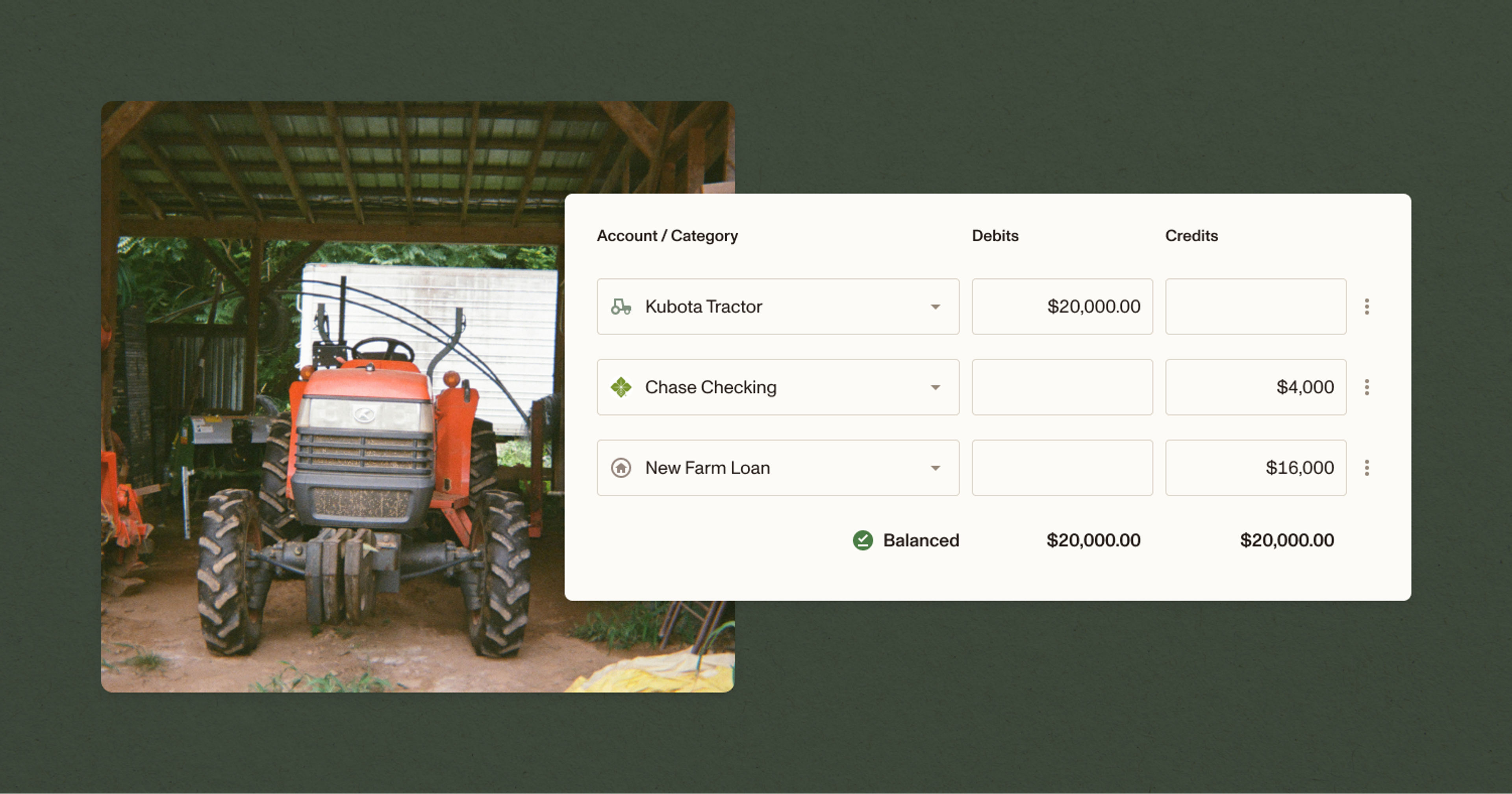
Funding petty cash is a transfer, not an expense. You debit your petty cash account and credit your checking (or operating cash) account.
Petty cash purchases are expenses. When you top up petty cash, you record each expense category for the amount you spent.
Log every purchase in your record book and keep receipts, so you can check the accuracy of your records later.
Reconcile your petty cash account once a month to catch missing receipts, unlogged purchases, or personal spending.
What is a petty cash account?
Petty cash is money you keep on hand to pay for small business expenses. The petty cash account is how this cash is identified in your chart of accounts and, in turn, your general ledger.
The way petty cash works is pretty simple: suppose you’re running errands and you buy a can of WD-40 for use on the job. It costs $2.99. Rather than writing a check or swiping a card for $2.99, you pay for it with petty cash and jot that transaction down in your record book.
During an average month, there’s a good chance you make a lot of small business purchases like:
Antibiotics, disinfectants, colostrum replacers and other unexpected animal care expenses
Wire, staples, lubricants and small repair parts
Small tools and hardware
Cleaning supplies and tools
Postage and other small office expenses
A box of screws, a parking fee at a job site, or a key cut for a rental unit
Instead of entering every little purchase on the books as it happens, you pay for it with petty cash and record those purchases together when you top up the petty cash fund. That saves you—or your bookkeeper—the trouble of categorizing lots of minor expenses one at a time while keeping your general ledger tidy.

Where does the money in petty cash come from?
You get petty cash by taking money out of your “Operating Cash,” the same account you use to cover larger expenses.
The traditional way to do this is by writing a check for the amount you need and cashing it. But you can also withdraw the money from the bank or from an ATM. The most important thing is that the withdrawal is recorded in the general ledger as a transfer to your petty cash account, not as an expense. (Moving money between two of your own accounts doesn’t change your profit.)
On the books, it looks like this:
| Account | Debit | Credit |
|---|---|---|
| Operating Cash | $100 | |
| Petty Cash | $100 |
You take $100 from your main cash account (credit “Operating Cash” $100) and put it in your petty cash account (debit “Petty Cash” $100).
That $100 petty cash is withdrawn as literal cash and coins which you keep on hand to cover small expenses.
How to set up a petty cash account for your business
Setting up a petty cash account is as simple as making sure “Petty Cash” is listed in your chart of accounts, and ensuring that whoever is doing your books correctly categorizes transactions under this account.
As far as managing the cash itself, what’s most important is that you keep your petty cash separate from your personal cash (or any cash set aside for other business uses). Getting your petty cash mixed in with your own money makes it more difficult to track how much you’ve spent.
For the sake of portability, many business owners keep petty cash in a separate wallet they carry with them, and which may include extra sections for receipts and your petty cash record book (more on that in a moment). But you may find it simpler to keep your petty cash at home in a small lockbox and take out money when you need it.
How to use a petty cash record book
Even if the expenses you pay for with petty cash are small, and even if they’re not being entered directly into the general ledger, you need to keep a record of them.
This helps you easily see how much petty cash you have left on hand. It also helps you track how quickly you spend your petty cash, and on which expenses, so that in the future you can increase or decrease the amount of petty cash you typically carry.
Your petty cash record book may not be a literal book. A printed sheet does the trick; there are plenty of free petty cash sheets available online. Just make sure that you keep each sheet once you’re done with it, and keep all the sheets organized by date.
That way, when petty cash questions come up (like, “How many cans of WD-40 do I buy in a month?”), you can always check your records.
Petty cash record book example
The petty cash record book looks a lot like your check register. The biggest difference is that you use it to record cash you’ve spent, not checks you’ve written.
Here’s an example of a petty cash record book in use:
Petty Cash Record Book — July 1 to July 31 (previous balance: $5.13)
| Date | Description | Category | Cash in | Cash out | Balance |
|---|---|---|---|---|---|
| July 1 | Petty cash top up | — | $94.87 | $100.00 | |
| July 3 | WD-40 | Supplies | $2.99 | $97.01 | |
| July 8 | Coffee with accountant | Meals | $5.57 | $91.44 | |
| July 10 | Zip ties | Supplies | $3.89 | $87.55 | |
| July 17 | Wasp nest spray | Supplies | $6.77 | $80.78 | |
| July 22 | Curry comb | Supplies | $4.15 | $76.63 | |
| July 27 | WD-40 | Supplies | $2.99 | $73.64 | |
| Spent in July: Supplies $20.79 + Meals $5.57 | $26.36 | $73.64 |
The dates cover the month of July.
The “previous balance” is petty cash carried forward from the previous month.
This business keeps $100 in petty cash and tops up the account on the first of every calendar month. On July 1, there’s cash in (money deposited) recorded to bring the total balance (including last month’s remaining balance) to $100.
Then each payment from petty cash is recorded along with its date, description, and amount as cash out (money spent).
The Category column is what makes month-end easy: when you top up, you already know how much of the month’s petty cash went to each expense category.
When the business tops up on August 1, it withdraws $26.36 from checking and records it as $20.79 to Supplies and $5.57 to Meals, so every petty cash purchase lands in the right expense category.

Kevin, owner of Double V Cattle in Tennessee, runs his business's books on Ambrook.
How to use a petty cash account
There are three tasks you need to stay on top of when it comes to your petty cash account:
Topping up petty cash
Recording purchases with petty cash
Reconciling petty cash
1. Topping up petty cash
You may choose to top up your petty cash whenever it gets low, or set a schedule to top it up once per month.
Topping it up as you go requires less planning, but it may make it harder to get a sense of how much you’re spending on petty cash until you sit down and look at the books.
Topping up petty cash every month makes it easier to budget, and you’ll get a better sense of how much you’re spending overall. However, you may have months where you run out of petty cash and need to withdraw extra money. Keep a record of these cases: It may be a sign you need to budget more per month for petty cash.
2. Recording purchases with petty cash
The typical order of events when you spend petty cash looks like this:
You make a purchase with petty cash
You record the purchase in your petty cash record book
You save the receipt for the purchase
It doesn’t get much more complicated than this. But if you’re new to using petty cash, it’s a good idea to go through this checklist every time. Steps 2 and 3 are vitally important to making sure your record book is accurate and up to date.
3. Reconciling petty cash
Keep a receipt for each purchase made with petty cash.
Since you’re using cash, none of those purchases will show up in your bank statement. The only record you have is the information you write down and the receipts you save.
At the end of each month, sit down and reconcile your receipts with the entries in your petty cash book. Match the receipt to each purchase, and mark it with a check mark. In some cases, one receipt—for multiple items purchased—may translate into multiple entries in petty cash. It’s the same idea as a bank reconciliation, but for the cash in your lockbox.
If you have a receipt for a purchase but it doesn’t show up in your record book, you may have forgotten to enter it. If a purchase shows up in your record book but you don’t have a receipt, you may have forgotten to keep a receipt. These are the most common errors.
But there’s also the chance that, in a rush, you used personal funds to pay for petty cash expenses, or else used petty cash to cover personal expenses. Or else you may have entered an incorrect amount for a purchase.
There’s no 100% sure way to guard against these errors, but keeping receipts—and reconciling petty cash once a month—helps you to catch them. A clean petty cash log also makes year-end bookkeeping much easier.
How much money should you keep in petty cash?
Businesses may keep anywhere from $50 to $500 in their petty cash accounts. Anything less is unlikely to cover your expenses, and anything more is excessive.
You should aim to keep enough money in petty cash to cover your expenses, with the minimum amount possible left over at the end of every month. It can be tricky finding the magic number. Consider starting out with a round sum—$100, for instance—and see how it goes.
The good thing about petty cash is that, while it’s not ideal, if you run out of money, you can always withdraw more (so long as you record it properly in your general ledger and your petty cash record book).
But aim to settle on an amount that allows you to top up your account once per month rather than once per week. It will save you extra paperwork.
Finally, avoid the temptation to take out $500 in petty cash when you need something closer to $100. It may be comforting to know you’ll never run out of cash, but any extra cash you carry around is cash that could be lost or stolen. It’s also money that could be more productively used on larger expenses.
What are appropriate uses for petty cash?
Here are the criteria for an appropriate use of petty cash:
The expense is business related;
the expense is relatively small;
it’s a miscellaneous expense, and doesn’t fit any of your existing accounts, OR
it fits one of your existing accounts, but it’s small and irregular enough that it’s not worth entering in the general ledger.
Some examples:
Coffee or a snack with staff, contractors, vendors, sales reps, or anyone connected to your business
Gifts for staff, contractors, vendors, etc.
Purchases of office supplies (small ones, e.g., a ream of printer paper, not a box)
Purchases of farm supplies (small ones, e.g., a can of WD-40, not a case)
Emergency repairs (small ones, e.g., patching a tire on a work truck, not buying a new tire)
Rule of thumb: If a purchase exceeds the amount you typically keep in petty cash, it should be paid for from your checking account and categorized as a business expense on the books.
What are inappropriate uses for petty cash?
Inappropriate uses for petty cash include:
Any and all personal purchases
Recurring expenses (e.g., your business phone bill)
Gifts or meals for people not connected to your business
Any purchases in excess of the total amount you typically keep in petty cash
Paying salaries or wages to employees or independent contractors
Petty cash examples by industry
To summarize, here are examples of appropriate and inappropriate uses for petty cash, depending on your business.
| Business | Examples of petty cash expenses | Examples of card or billed expenses |
|---|---|---|
| Farm or ranch | WD-40, zip ties, wasp spray | Feed, seed, fuel, vet bills |
| Construction | A box of screws, a job-site parking fee, a small dump fee | Job materials, subcontractors |
| Trucking | A cash-only toll, a scale ticket | Fuel, repairs, permits |
| Property management | Spare keys, light bulbs, a furnace filter | Repairs, maintenance, vendor work orders |
Frequently asked questions
What is a petty cash record book?
A petty cash record book is a log of every dollar you’ve added to or spent from your business’s petty cash fund. It lists the date, description, amount, and running balance for each transaction, so business owners can see what was purchased and how much cash is left.
What should a petty cash log include?
Each line should show the date, a short description, the expense category, cash in or cash out, and the running balance. Many businesses also note a receipt or voucher number and who made the purchase.
How much should a small business keep in petty cash?
Most businesses keep between $50 and $500. Start with a round number like $100, track how fast it runs out, and adjust so you only top up about once a month.
How often should you reconcile petty cash?
Try to reconcile petty cash at least once a month, and every time you top it up. Match each receipt to an entry in the record book and count the cash that’s left.
What if petty cash doesn’t balance?
If petty cash isn’t balancing, recount the cash and look for missing receipts or unlogged purchases. If you’re still seeing a difference, you can record it to a Cash Over and Short account and note it in your record book.
Ambrook automatically keeps your records
While a record book makes petty cash easier to use and track over time, it can still be a hassle to keep tabs on every small expense that way.
With Ambrook, you can do away with a manual petty cash record book altogether. Issue spending cards to your team for purchases big and small, and every charge automatically lands in the Ambrook ledger. Crew members can scan receipts and tag transactions right from the parking lot, and you no longer have to chase down records.
At Ambrook, our mission is to build a more prosperous and resilient future for America’s family-run businesses. We’re starting with accounting, payments, and financial reporting tools to help businesses manage finances, improve margins, and stay independent.
This resource is provided for general informational purposes only. It does not constitute professional tax, legal, or accounting advice. The information may not apply to your specific situation. Please consult with a qualified tax professional regarding your individual circumstances before making any tax-related decisions.