
An accurate cash flow budget helps you stay on top of bill payments, know your borrowing needs, and plan big investments with confidence.
A cash flow budget lays out the cash you expect to flow in and out of your business over a given period of time, often month-by-month or quarter-by-quarter. It helps you see when you’re short and pick the best time for moves like a large purchase or a new investment.
Knowing when exactly you’ll need cash on hand to pay the bills is important in any line of business. But it’s particularly important in industries like agriculture, construction, trucking, or property rentals, where large seasonal outflows and inflows of cash make financial planning a necessity.
That’s where the cash flow budget comes in: it’s an estimate of all the cash you expect will move in and out of the business over a certain period of time, usually on a monthly or quarterly basis. Running a business without one can feel like you’re steering blind, while a good cash flow budget can help you avoid cash shortages and get peace of mind.
Key takeaways
A cash flow budget helps you forecast how much cash your business will have coming in and going out for each month (or quarter) of the upcoming year.
Unlike an income statement, cash flow budgets include loan proceeds, loan principal, and equipment purchases. True to their name, they leave out non-cash items like depreciation.
When one month’s ending balance is negative or too low, it shows when you’ll need to borrow, delay a purchase, or collect money sooner from customers.
Business owners typically build a cash flow budget from last year’s records, then update it with actual numbers throughout the year.
What is a cash flow budget?
A cash flow budget (also sometimes called a cash flow forecast) is an estimate of your business’s monthly, bimonthly, or quarterly cash inflows and outflows for the year. Businesses usually produce cash flow budgets at the beginning of the year based on data from previous years to better understand what their cash needs will be for each period, avoid cash shortfalls, and plan future borrowing and investing activities.
What’s the difference between cash flow and income?
Unlike your income statement, which includes non-cash transactions like changes to inventory, depreciation, credit sales and payables, the cash flow budget only includes inflows and outflows of cash.
Revenue and expenses are recognized when they’re earned or used, while cash inflows and outflows occur as soon as they move in and out of your bank account. That’s why your cash budget will include some transactions you won’t find on an income statement, like unearned income and loan proceeds.
That’s also why profitability and cash flow are two different things. Some things you do to improve cash flow in the short term (like selling inventory or assets) can be unprofitable, while activities that increase profits in the long term (like investing in new capital) might result in decreased cash flow.
Read more: How to Read an Income Statement
What’s the difference between a cash flow budget and a cash flow statement?
The cash flow budget includes many of the same inflows and outflows you would include on your regular cash flow statement.
Unlike your cash flow statement, which is a reporting tool that helps you understand what your inflows and outflows were in the past, the cash flow budget is a planning tool that forecasts what you believe those numbers will look like in the future.
If your business produces cash flow statements, you’ll definitely want to have those on hand when producing a cash flow budget.
Read more: How to Read a Statement of Cash Flows
What’s the difference between a cash flow budget and a cash flow forecast?
You may have also heard some business owners talk about creating cash flow forecasts. In practice, cash flow forecasts and budgets are often used interchangeably. They both generally refer to a document that estimates your business’s cash inflows and outflows for the year—and one that you’ll adjust as real numbers come in.
For some business owners though, a cash flow budget also includes financial goals or targets that you set based on those estimates. You might, for example, project that you’ll spend $5,000 on maintenance in January but set a goal of bringing that down to $4,500 by making changes to your operations.
Financial tools worthy of your work.
Why is the cash flow budget important?
A business’s cash inflows and outflows rarely match up exactly, which is what makes the cash flow budget such an important tool: it helps businesses estimate when during the year they’ll need cash in the bank account to cover bill payments, when cash will be plentiful and available for big purchases, and when the business will need to borrow more cash.
A reliable cash flow budget can be particularly useful to businesses that see large outlays of cash in one season and large inflows of cash in another. For example:
Farmers plant crops in the spring (large outflows) and sell crops in the fall (large inflows)
Contractors buy materials at the start of a job (large outflows) and aren’t paid by clients until later when the work is completed (large inflows)
Vacation rental property managers pay for major repairs or maintenance in the off-season (large outflows) and collect rent in the busy season (large inflows)
Ranches in particular tend to experience large outflows in the fall when purchasing feeder cattle, and large inflows in the spring when those cattle are sold. The cash flow budget helps producers navigate these large swings by:
Helping time input purchases and investment opportunities to minimize impact on cash
Helping plan sales and project whether the business will have enough revenue from future sales to cover cash needs
Identifying additional lending needs and communicating them to lenders, and helping gauge the business’s ability to repay existing loans
Providing an overall benchmark for cash flow performance throughout the year

Chad Stevens uses Ambrook to track the return on his investments into Halcyon Ranch in Texas.
How do I create a cash flow budget?
Most businesses will create a cash flow budget at the start of the fiscal or production year, ideally before any major financial decisions are made or production begins.
Here are the basic steps to building your own cash flow budget:
1. Take inventory and look at last year’s records
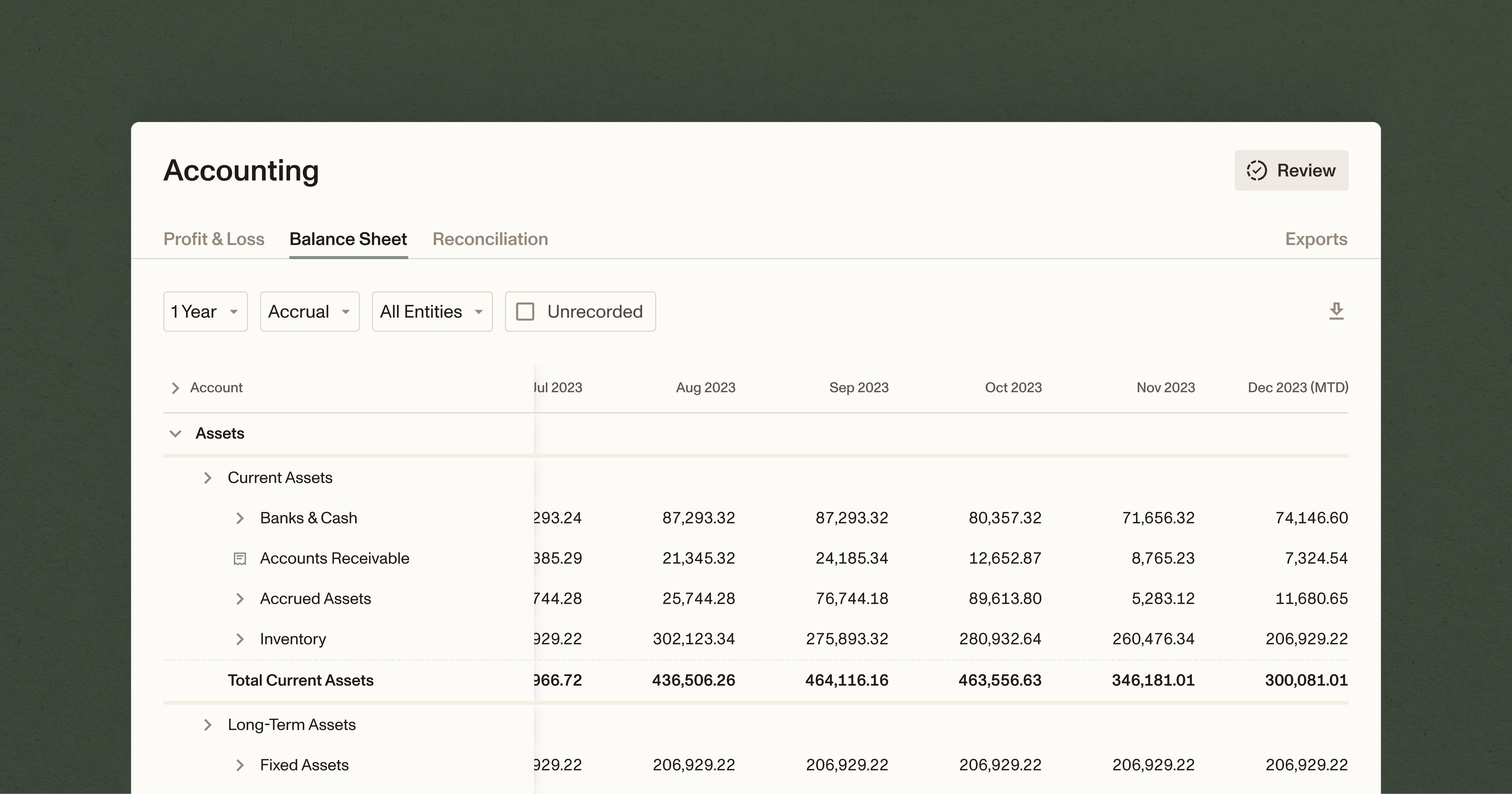
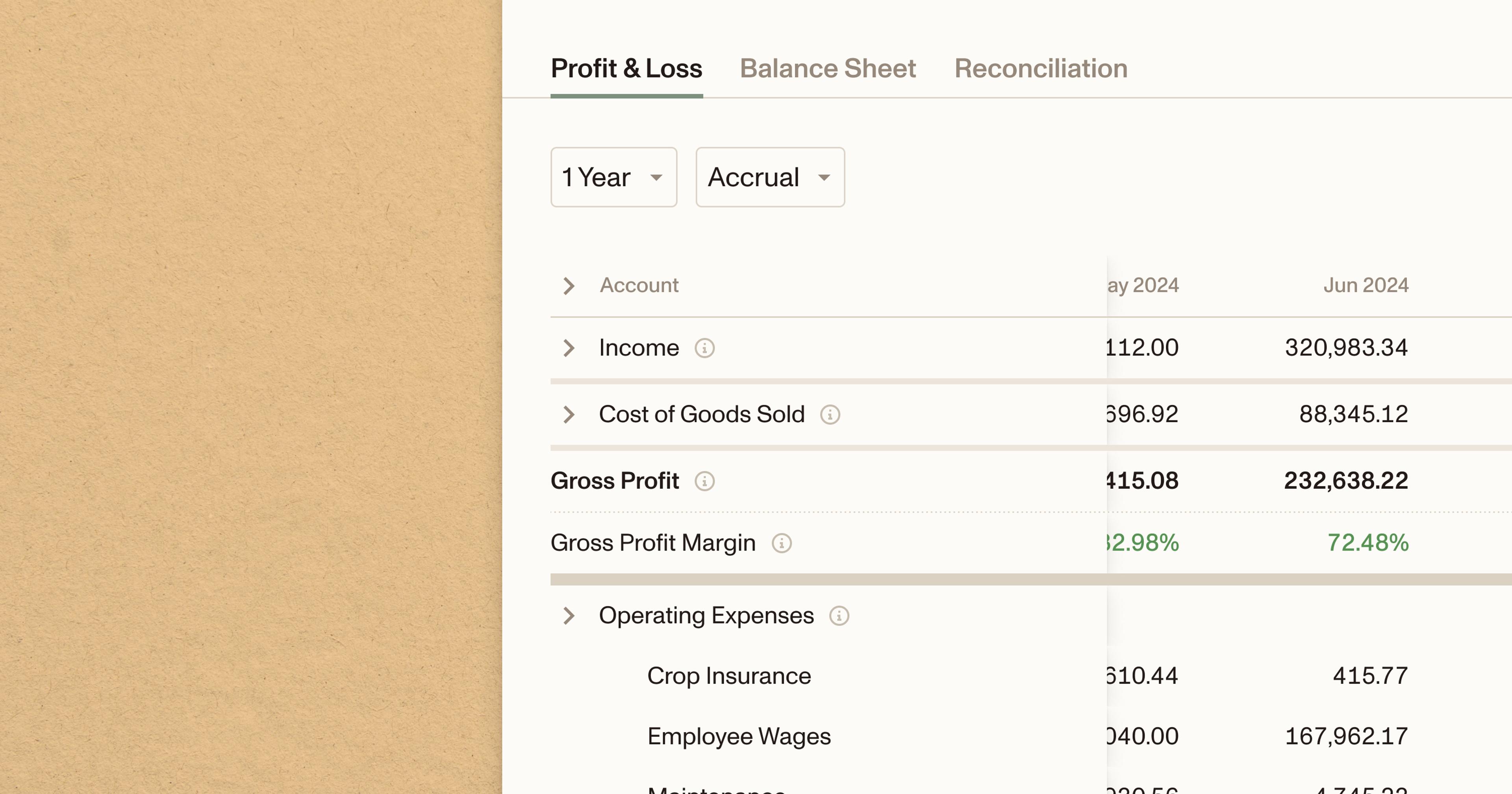
Before you begin, take an inventory of your current assets, including things like cash on hand, inventory, supplies, livestock, and accounts receivable. If you’re using an accounting system like Ambrook, your reports can help you here; review your latest income statements and a current balance sheet to make sure you’ve accounted for everything.
Look at your records from previous years, then think about how much more or less you want to sell, produce, haul, build, or rent out this year. You’ll use that comparison to estimate how much feed, supplies, or other inputs you’ll need to execute the projects and goals you’re planning for.
Creating a cash flow budget can get tricky if your business is just starting out or you don’t have records from previous years. If that’s the case, consider reaching out to your local extension office for data and benchmarks for similar-sized businesses in your area.
2. Estimate cash inflows
Using inventory and revenue data from your income statement, develop estimates of all your cash inflows for each period. Remember that cash inflows include all of the cash the business expects to receive from sources like:
Payments from construction clients
Rent from tenants
Hauling income
Livestock sales, including cull cows and livestock products
Crop and excess feed sales
Payments from government programs
Machine work income
Loan proceeds or line of credit draws
Be sure to use conservative price projections when estimating sales, and try projecting revenues for multiple price levels to get an idea of how much inflows could vary.
Use your knowledge of your operation’s seasonal rhythm to make estimates as accurate as possible. For example, if you usually pause excavation work in the winter, make sure to leave out that income from the budget for January, February, and December.
Tip: You could also consider using AI to help you with this part. If your books are current and connected to a tool like Claude or ChatGPT, you could have it look at your previous income statements and balance sheet, then suggest inflow and outflow estimates for you to fact-check and review. Learn more about using AI for financial planning.
3. Estimate cash outflows
Similarly, use the inventory and income statement data from above to estimate what your cash outflows will be for each period. Cash outflows could include transactions like:
Operating expenses like labor, feed, seed, fuel, insurance, or machine hire
Project or production expenses like materials or subcontractors
Asset purchases like machinery, equipment, and livestock
Maintenance and improvements to buildings
Off-farm expenses
Loan payments
Estimated tax payments and owner’s draws
Once again, rely on what you know about your business’s seasonal workings and operations to forecast outflows as accurately as possible.
4. Fill in your budgeting spreadsheet
When you have an idea of your business’s expected inflows and outflows for each month, start penciling the numbers in a spreadsheet or document you can come back to throughout the year. Download our cash flow projection worksheet for a pre-built template, and replace the line items with your own income and expenses.
Tip: If you’re using AI to help you with budgeting, you could also ask it to build you a cash flow budget tracker or dashboard for this step. Follow our guide to building a business dashboard with AI tools.
5. Update with actuals
Remember that your cash flow budget should be updated every month or quarter to reflect actual inflows and outflows, and to adjust for changes in price, weather, costs and other external factors.
Throughout the year, return to your budgeting spreadsheet or dashboard to fill in actual numbers next to your estimates. You’ll be able to see where your forecasts were off, which can help you create more accurate budgets in the future when you’re going to the lender or preparing for another year.
See which months are running short with our 12-month cash flow projection worksheet.
Cash flow budget: An example
Let’s look at a simple example of a monthly cash flow budget for a hypothetical wheat and soybean business named Ambrook Farms Inc.
Ambrook Farms Inc. - Cash Flow Budget
| January | February | March | |
|---|---|---|---|
| Beginning Cash | $50,000 | $113,450 | -$26,050 |
| Cash Inflows | |||
| New loan | 250,000 | ||
| Wheat | 15,000 | 45,000 | |
| Soybean | 40,000 | 12,500 | 25,000 |
| Accounts Receivable | 10,000 | 25,000 | |
| Custom Work | 5,000 | ||
| Personal funds | 25,000 | ||
| Total cash inflows | $315,000 | $42,500 | $95,000 |
| Cash Outflows | |||
| Utilities | 350 | 350 | 350 |
| Maintenance | 5,000 | ||
| Fuel | 600 | 600 | 2,500 |
| Fertilizer, Chemicals | 400 | 7,500 | |
| Seed, Plants | 25,000 | ||
| Crop insurance | 14,500 | ||
| Capital investments | 250,000 | 175,000 | |
| Interest payments | 150 | 200 | 150 |
| Loan payments | 450 | 450 | 450 |
| Total cash outflows | $251,550 | $182,000 | $50,450 |
| Ending cash | $113,450 | -$26,050 | $18,500 |
Normally you would create a monthly cash flow budget for every month of the year, but this simplified budget shows cash flow for just three months: January, February, and March.
So what does Ambrook Farms Inc.’s cash flow budget tell us about its cash needs?
Cash outflows are projected to be particularly high in January and February, when the business plans on making major capital investments in buildings, equipment, and land, as well as March during crop planting. The business plans to match these outflows with revenues from wheat and soybean sales, as well as cash from a new $250,000 loan in January.
According to the budget, the business won’t be able to cover all of these outflows and will begin the month of March with a negative cash balance. With total cash inflows of $95,000 and outflows of $50,450 for the month, however, the business will generate enough cash to end the month with a positive cash balance.
How do you increase cash flow?
So you’ve drawn up a cash flow budget and realized your business might run into cash flow problems at some point during the year. What can you do next?
1. Increase production and prices
Consider whether your business has the ability to earn more from its primary source of income, either by increasing production volume, increasing prices, doing more custom work, selling more inventory, or pursuing different distribution channels.
2. Cut costs
Take a close look at your operational costs and consider opportunities to cut labor costs, negotiate better land or livestock lease terms, and lower input costs by buying in bulk or sharing equipment with other operators.
3. Sell capital assets or delay capital investments
Selling livestock, equipment, machinery or land can provide a short-term injection of cash, but it also deprives your business of the means of generating future income. If selling isn’t an option, consider whether any planned capital investments can be delayed by repairing or maintaining existing capital.
4. Reduce debt payments
If debt payments are contributing to cash flow problems, talk to your financial advisor or lender about ways to restructure or consolidate your debt to lower them. (Remember that changing repayment terms often means extending debt further into the future.)
5. Add new sources of income
In addition to increasing cash from your core business, consider whether your operation can take advantage of related income opportunities. For example:
Farms often branch into agritourism, event space rentals, land leasing, hunting fees, and selling processed farm commodities.
Contractors might expand from only working on new builds to doing repairs and maintenance.
Trucking business owners might pick up backhauls, or get certified to carry new kinds of loads and materials.
6. Collect payments faster and time your bills
Sometimes, small changes to how you collect payments from customers or how you pay your vendors can affect your cash flow. For instance:
If invoices take you a while to send out manually, that might be delaying when payments could land in your bank account. Payments software like Ambrook can help send out invoices faster, or you can try other ways to make invoicing more efficient.
Consider timing bill payments to their due dates instead of always paying early, so you can hold cash for a little longer.
If you work construction jobs or provide fencing services, you could ask for deposits on large projects to balance out the cash flow.

At Bayview Lobsters in Maine, owner Kyle uses Ambrook to run the books.
Frequently asked questions (FAQs)
Let’s review what we covered about cash flow budgets and how to create one for your own business.
What is a cash flow budget?
A cash flow budget is a plan that lays out how much cash you expect your business to receive and spend over a given period of time (usually month-by-month for the upcoming year). It’s a tool that shows business owners when cash will run short or pile up, so they can plan ahead for large purchases, projects, loans, and bill payments.
What is the difference between a cash flow budget and a cash flow statement?
A cash flow budget is a forecasting tool that helps you estimate future cash movements. A statement of cash flows looks back at a period of time and reports the cash that actually moved in or out during that period.
Is a cash flow budget the same as a cash flow forecast?
Cash flow budgets and forecasts are often used (and referred to) interchangeably. Typically, they both estimate how much cash your business will have coming in or going out for a given period of time. Some business owners see budgets as a forecast that also lists out financial goals or targets for the upcoming year.
What should be included in a cash flow budget?
Make sure to include expected cash inflows like sales, customer payments, loan proceeds, and owner contributions, and expected cash outflows like operating expenses, payroll, equipment purchases, loan payments, and taxes. Leave out non-cash items like depreciation.
How often should you update a cash flow budget?
Ideally at the end of every month, you compare your actual cash flow to the numbers you forecasted earlier. Then, you can note the difference and use it to adjust your budget for the following months if needed.
Why can a profitable business run out of cash?
Sometimes, profit accounts for sales or income when they’re earned (e.g., when you invoiced a client for a construction project), but before the cash payment has actually landed in a business’s bank account (i.e., when the money shows up in your bank account and ledger). That’s why profitability and cash flow don’t always match each other exactly.
How far ahead should a cash flow budget go?
Most businesses budget 12 months ahead, month by month. Some business owners might also keep a short weekly forecast for tighter seasons.
Track every dollar with Ambrook
Ambrook automatically generates income statements and a balance sheet from your books so you can confidently budget next year’s cash flow with accurate data. Once the new year is underway, Ambrook produces a statement of cash flows as you keep up with your bookkeeping, invoices, and bills, so you know where every dollar is moving in and out.
Our mission is to build a more prosperous and resilient future for America’s family-run businesses. We’re starting with accounting, payments, and financial reporting tools to help businesses manage finances, improve margins, and stay independent.
This resource is provided for general informational purposes only. It does not constitute professional tax, legal, or accounting advice. The information may not apply to your specific situation. Please consult with a qualified tax professional regarding your individual circumstances before making any tax-related decisions.